
Sustainable wedding flowers in Sussex | 7 simple eco-friendly ideas
Planning a wedding can feel overwhelming, so many decisions, suppliers and details to juggle. For couples who are conscious of their environmental impact, this can add another layer of pressure.
The good news is that it’s absolutely possible to have beautiful, impactful sustainable wedding flowers while making more environmentally conscious choices.
As a Sussex wedding florist, I specialise in natural, seasonal wedding flowers in Sussex. Flowers are a non-negotiable part of a wedding day for me — but they can also be one of the most flexible areas when it comes to reducing your footprint.
Here are some simple ways to make your wedding flowers more eco-friendly, without compromising on style.

1. Choose local suppliers
Working with local suppliers is one of the easiest ways to reduce your wedding’s environmental impact.
A local florist will:
● Reduce travel and transport emissions
● Be more likely to source flowers nearby
● Have strong relationships with local growers
If you’re getting married in Sussex, choosing a Sussex-based florist also means your flowers are more likely to reflect the season and setting of your day.
2. Embrace seasonal flowers
Thanks to global supply chains, it’s possible to source almost any flower at any time of year — but that doesn’t always make it the most sustainable option.
Choosing flowers that are naturally in season means:
● Less energy is used to grow them
● They’re often fresher and better quality
● They feel more in tune with your wedding setting
If you love a particular style or colour, your florist can suggest seasonal alternatives that give a similar feel — from spring ranunculus to autumn dahlias.
From left to right: 1. Kloon Hanoi ranuculus 2. Columbus double tulip 3. anemone 4. Coral Charm peony 5. Sarah Bernhardt peony 6. Cafe au Lait dahlia


“There are always flowers for those who want to see them.”
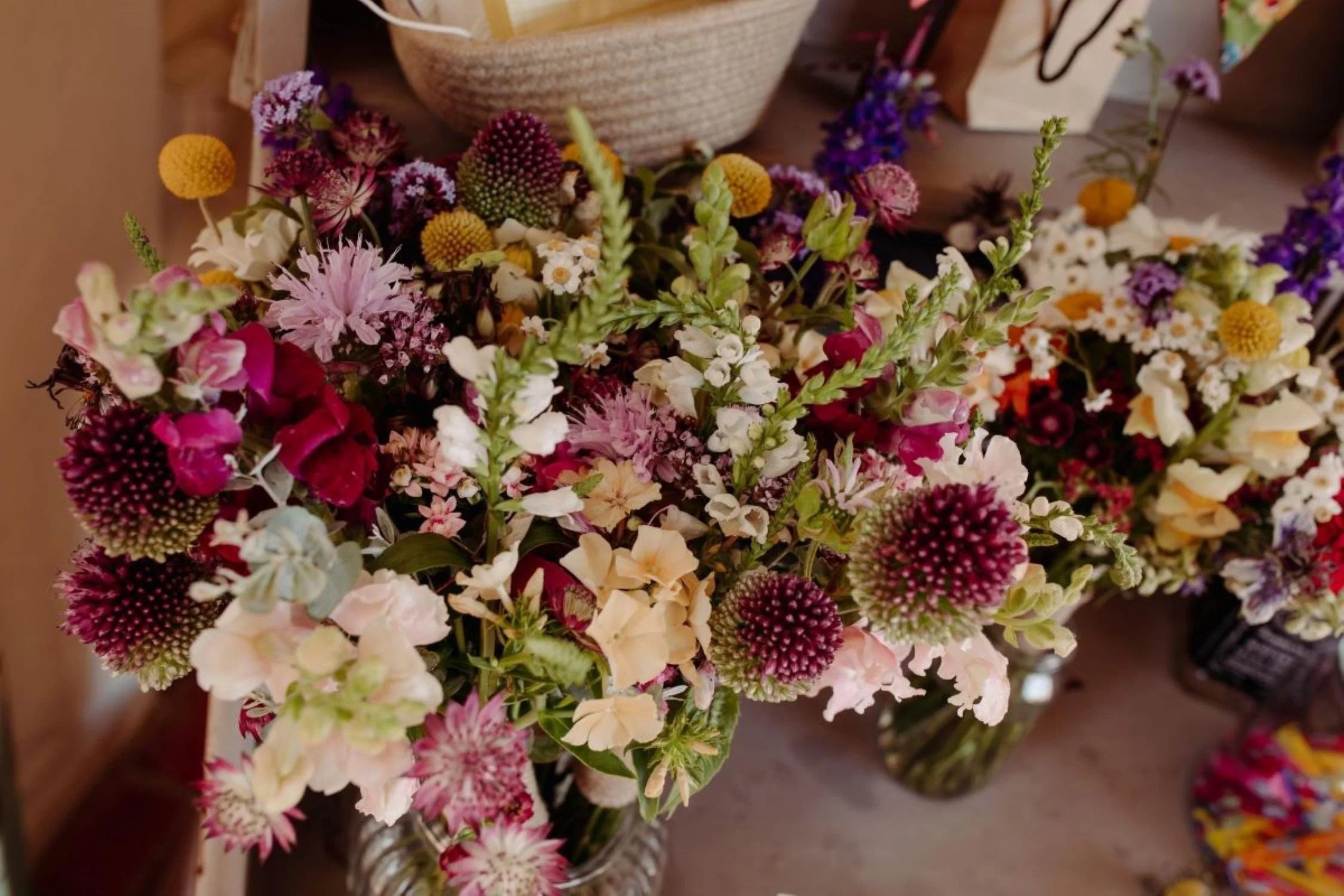
Photo above of locally grown wildflower style bud vases from a summer Sussex wedding at Court Garden Vineyard in Ditchling by Paul Fletcher. View more here.
3. Use British-grown flowers
Between April and October, many wedding flowers can be sourced entirely from within the UK.
British-grown flowers:
● Have no air miles
● Are often grown without chemicals or pesticides
● Have more natural movement, scent and character
In Sussex, there’s an incredible network of flower farms producing beautiful, seasonal blooms. My wildflower wedding package focuses entirely on locally grown flowers during the UK growing season.
Below is a selection of some of my wedding bouquets made with British local flowers grown in Sussex with no pesticides, chemicals or air miles involved in their creation or transport!


Photography by 1. Lauren Beth Photography 2. Emily Edgar Photography 3. Rosie Kelly Photography 4. Jasmine Andrews Photography 5. Lottie Topping Photography 6. Moments Captured Photography
4. Reuse and repurpose your flowers
One of the simplest ways to be more sustainable is to make your flowers work harder throughout the day.
For example:
● Ceremony flowers can become reception décor
● Aisle arrangements can be reused on tables
● Bouquets can be displayed in vases afterwards
This not only reduces waste, but also helps you get the most value from your flowers. Max your flowers and your budget here!
Photos 1-6 bud vases and milk churns by Tara Coonan Photography from a summer wedding at Gote Barn in Sussex. View more here. Photos 7-12 ceremony aisle bowls and table centres by Lisa Devlin Photography from an autumn wedding at Pelham House in Lewes.


5. Avoid floral foam
Floral foam (the green sponge used in arrangements) is a single-use plastic that breaks down into microplastics and can harm the environment.
Many florists now offer alternatives such as:
● Chicken wire
● Moss
● Floral frogs
● Agra wool
If sustainability is important to you, it’s always worth asking your florist about foam-free options.
6. After your wedding day, the big clear up
There will always be some waste after a wedding, but a little planning can minimise it. Consider:
● Reusing elements where possible
● Offering flowers to guests to take home
● Donating arrangements to care homes or local organisations
● Checking how your florist disposes of waste
A thoughtful approach here can make a big difference.
7. Preserve your wedding flowers
If you’d like something to keep after the day, there are lots of ways to preserve your flowers.
From professionally preserved bouquets to pressed flower artwork, this can be a beautiful way to create something lasting from your wedding.
I offer a pressed flower service, creating bespoke frames using flowers from your bouquet — a simple, personal keepsake to treasure.
Below is an example of a pressed flower commission from a Sussex wedding at Bignor Park, images of bridal bouquet by Emily & Steve Photography, pressed flower frame photos by me @bmflowers_pressed.


Planning a sustainable wedding in Sussex?
If you’re planning a wedding in Sussex and are looking for natural, seasonal wedding flowers with a more sustainable approach, I’d love to hear more about your plans.
You can explore more of my work here: Wedding flowers in Sussex
Or get in touch to chat through your plans: Contact me
Like this post? I’d love to hear any feedback or comments below. Do follow me on Instagram for the latest work plus more tips and ideas for your wedding flowers. @bryonymaeflowers